

Giant corals in the Maldives: a research expedition with big impact
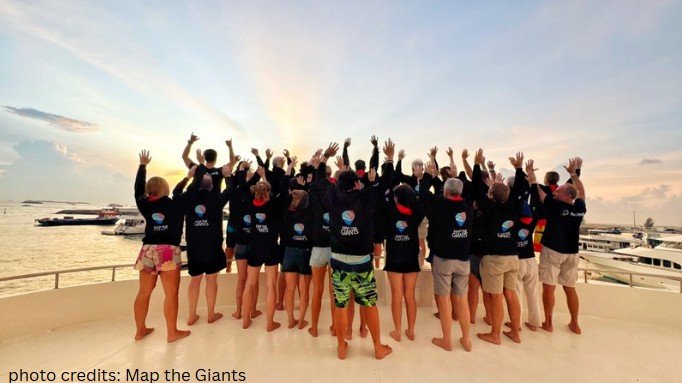
In May 2025, I joined the Map the Giants research expedition in the Maldives. Organised by researchers from the University of Milano-Bicocca and the MaRHE Center — the expedition brought together marine scientists, students, divers, photographers, filmmakers and other ocean enthusiasts from different countries.
Our goal was one that makes many marine biologists’ hearts beat faster: to search for giant coral colonies, measure them, document their condition, assess the fish and other marine organisms living around them and create digital records of these remarkable structures.
But what exactly is a giant coral—and why should individual colonies be mapped?
A coral is an animal—not a stone or plant
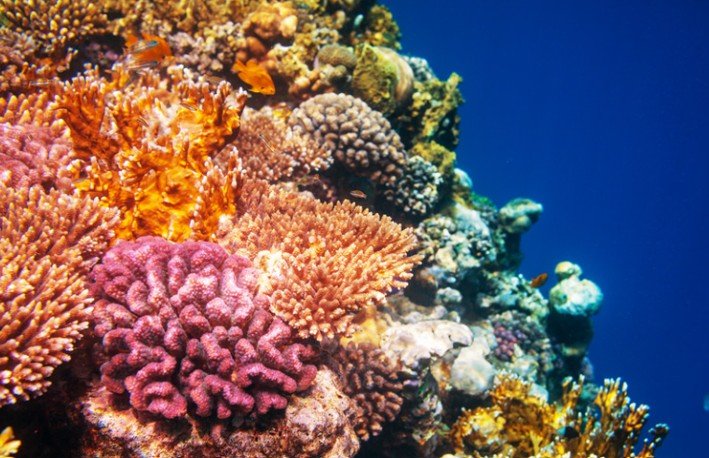
First of all, reef-building corals are animals. A colony consists of numerous small polyps connected through living tissue and supported by a shared calcium-carbonate skeleton. Most tropical reef-building corals also live in symbiosis with microscopic algae that provide much of their energy through photosynthesis. Over time, the accumulated skeletons of many colonies help build the three-dimensional framework of a reef. These structures provide food, shelter and breeding grounds for fish, crustaceans, molluscs and many other organisms.
The monumental trees of the sea
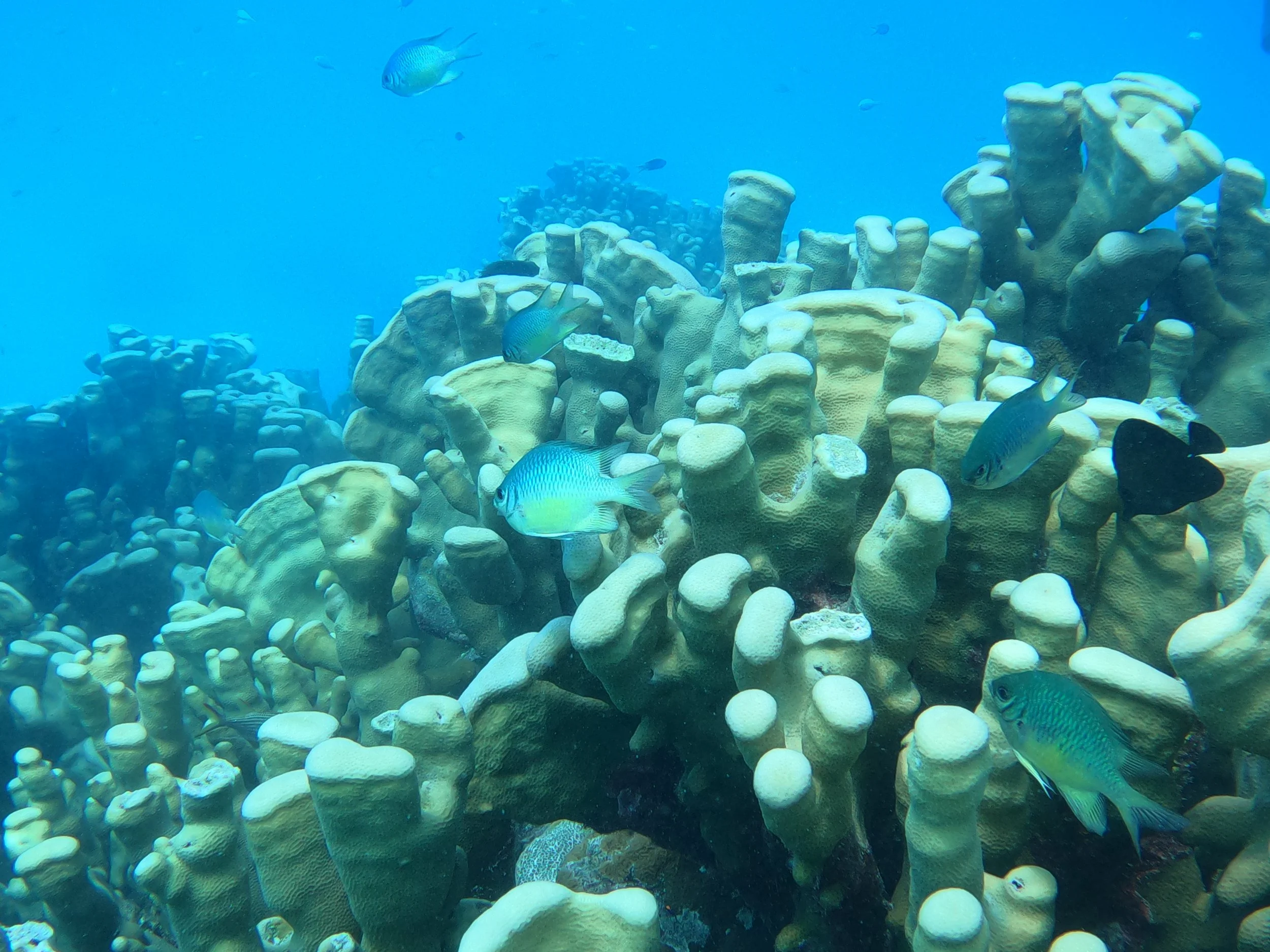
Most people associate marine giants with whales, sharks, manta rays or sea turtles. Corals are more often perceived as part of the underwater landscape: beautiful and ecologically important, but stationary and almost anonymous. Yet some individual colonies have been growing for centuries, and exceptional examples can reach the length of a blue whale.
Within Map the Giants, a coral qualifies as a “giant” when it measures at least 5 metres in one projected linear dimension and has continuous living tissue and/or a continuous skeletal structure. For instance, some known Porites colonies exceed 20 metres in diameter, while others reach circumferences of several dozen metres. The project founder Dr. Simone Montano therefore compared them with the monumental sequoias of the terrestrial world: ancient, structurally complex and witnesses to centuries of environmental change.
Living archives—and vulnerable survivors
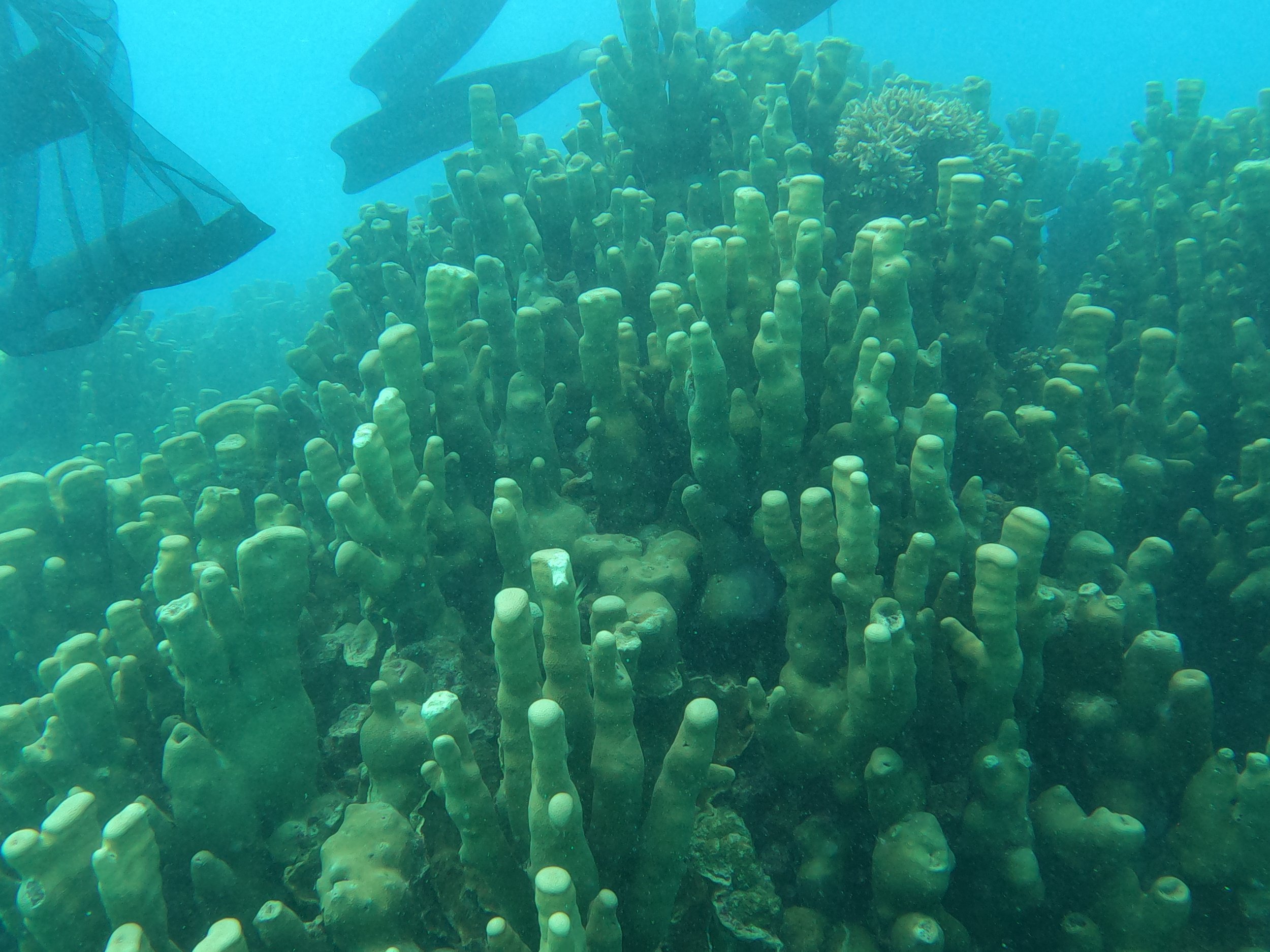
As massive corals grow, their skeletons preserve chemical signals related to seawater temperature, water chemistry and other environmental conditions. Scientists use these archives to reconstruct ocean and climate histories from periods long before instrumental measurements began.
Growth rates vary greatly. Some branching corals may extend by more than 10 centimetres per year, while massive species such as Diploastrea heliopora may grow only a few millimetres annually. When such colonies reach several metres in size, they may represent centuries of growth; some Porites colonies may even exceed one thousand years. Their survival raises a key scientific question: did these colonies persist because they grew in thermal refuges, acclimatised to repeated stress or possess genetic, physiological or epigenetic traits that improved their tolerance? Several mechanisms may interact, and survival so far does not make them invulnerable.
However, the wider conservation status of reef-building corals is alarming. In its latest global reassessment, the IUCN evaluated 892 warm-water reef-building coral species and concluded that 44% are threatened with extinction. These include species classified as Vulnerable, Endangered or Critically Endangered. Others are Near Threatened or Data Deficient, meaning that too little information is available to assess their extinction risk reliably (IUCN, 2024).
How Map the Giants began
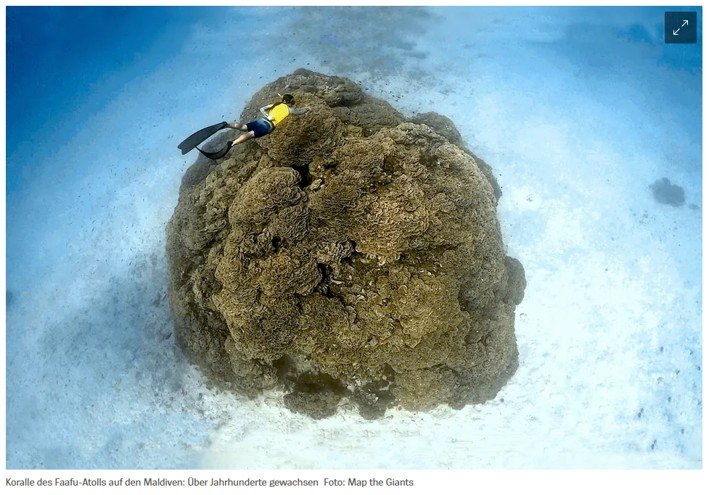
The project was inspired by monumental colonies such as “Big Momma,” a massive Porites coral in American Samoa, and by the realisation that many giants may remain undocumented. Dr. Simone Montano has recalled noticing dark underwater patches in satellite images of the Maldives and asking the local team to investigate. The discovery of enormous colonies close to the MaRHE Center helped spark a wider, systematic search.
From Malé to the search for giants
Our journey began in Malé, warmly welcomed by Dr. Federica Siena and her team. From there, a colourful international team of researchers, students, professors, teachers, filmmakers, and divers travelled together to begin the search. We were divided into groups with different responsibilities. Our tasks included locating possible giant colonies, measuring their dimensions, recording depth and position, assessing visible health, documenting surrounding reef communities and taking underwater photographs and videos; in collaboration with our awesome dive school White Waves Maldives. Some colonies were photographed systematically for photogrammetry and later 3D-reconstruction.
My own work included fish censuses around the giant corals. These surveys documented which fish were present and helped us view each colony not as an isolated object, but as habitat embedded within a wider ecological community. The expedition followed the project’s advanced survey approach, which can include exact measurements, GPS coordinates, temperature, taxonomic identification, living-tissue cover, bleaching status, growth anomalies and potentially harmful or competing organisms.
Diving was only one part of the work. Afternoons and evenings were filled with organising images, entering data, checking field records and learning from workshops led by more experienced researchers. These hours on land were less spectacular than meeting a giant coral underwater, but they were essential: observations become scientifically useful only when they are recorded consistently and preserved for later analysis. And we did fun dives too - and saw handsome nurse sharks!!
A scientific expedition—and a human experience
The expedition also had a strong human dimension. Although our backgrounds and experience levels differed, we were connected by a shared concern for coral reefs and a love for the ocean. There was something emotionally powerful about gathering around organisms that had existed long before any of us were born. We might spend hours measuring a colony that had been growing for centuries. Part of these data were even used for scientific publications, master theses and PhD research!
But dedicated expeditions alone cannot locate giant corals across the world’s vast and remote reef areas. Map the Giants therefore combines scientific fieldwork with citizen science. Divers, snorkellers, researchers, tourism operators and other ocean users can submit photographs, location information, depth and size estimates through the project website. Reports are assessed by researchers who then decide whether the colony meets the project’s criteria. Validated colonies receive an identification number and are added to the interactive map.
Making invisible lives visible
Giant corals offer hope, but they should not become symbols of effortless resilience. They remain exposed to warming, acidification, pollution, disease, destructive fishing and coastal development. Coral restoration may help at particular sites, but it cannot replace effective protection, climate action and long-term management.
Mapping the giants will not by itself stop coral decline. But it can prevent exceptional colonies from disappearing without ever having been recognised. It can provide research targets, establish baselines for long-term monitoring and help the public understand that some of the ocean’s oldest inhabitants have been hiding in plain sight.
During our expedition, we searched, measured, counted fish, documented coral health and processed data. Yet we were also doing something more fundamental: giving individual organisms a place on the map. We cannot protect every coral from every future impact. But first, we need to know that they are there.
Giant Thanks to all people I have met during this expedition, it was just wonderful <3
References
Brown, D. P., Basch, L., Barshis, D., Forsman, Z., Fenner, D., & Goldberg, J. (2009). American Samoa’s island of giants: Massive Porites colonies at Ta‘ū Island. Coral Reefs, 28(3), 735.
Bythell, J. C., Brown, B. E., & Kirkwood, T. B. L. (2018). Do reef corals age? Biological Reviews, 93(2), 1192–1202.
Camp, E. F., Schoepf, V., & Suggett, D. J. (2018). How can “super corals” facilitate global coral reef survival under rapid environmental and climatic change? Global Change Biology, 24(7), 2755–2757.
Coker, D. J., Wilson, S. K., & Pratchett, M. S. (2014). Importance of live coral habitat for reef fishes. Reviews in Fish Biology and Fisheries, 24(1), 89–126.
Coward, G., Lawrence, A., Ripley, N., Brown, V., Sudek, M., Brown, E., Moffitt, I., Fuiava, P., & Vargas-Ángel, B. (2020). A new record for a massive Porites colony at Ta‘ū Island, American Samoa. Scientific Reports, 10, 2020.
D’Olivo, J. P., Zinke, J., Goyal, R., England, M. H., Purich, A., Corrège, T., et al. (2024). Coral Sr/Ca–SST reconstruction from Fiji extending to approximately 1370 CE reveals insights into the Interdecadal Pacific Oscillation. Science Advances, 10(33), eado5107.
Drury, C. (2020). Resilience in reef-building corals: The ecological and evolutionary importance of the host response to thermal stress. Molecular Ecology, 29(3), 448–465.
Graham, N. A. J., & Nash, K. L. (2013). The importance of structural complexity in coral reef ecosystems. Coral Reefs, 32(2), 315–326.
IUCN. (2024). Global reassessment of warm-water reef-building corals. The IUCN Red List of Threatened Species.
Lough, J. M. (2010). Climate records from corals. WIREs Climate Change, 1(3), 318–331.
Lough, J. M., & Barnes, D. J. (1997). Several centuries of variation in skeletal extension, density and calcification in massive Porites colonies from the Great Barrier Reef. Journal of Experimental Marine Biology and Ecology, 211(1), 29–67.
Schadwinkel, A. (2025, July 29). „Korallen so groß wie ein Blauwal“: Artenschutzprojekt „Map the Giants“. Der Spiegel, 33/2025.
Siena, F. M., Gabbiadini, A., Fallati, L., Galli, P., & Montano, S. (2026). Map the Giants: A new citizen-science portal to map, study and protect the largest coral colonies. Nature Conservation, 63, 127–151.
Strona, G., & Montano, S. (2025). Thermal refugia support the long-term survival and growth of giant coral colonies. Global Ecology and Conservation, 64, e03992.
Team Map the Giants. (2024). Map the Giants: Alla scoperta dei coralli giganti. Idea Ginger.
