
The In-Between: Is a life on the road a life without a home?
.
Dahoam is überall (German/Spanish)
As a frequent traveller and explorer, living abroad has become a kind of home for me: my in-between place.
Whenever I live abroad, I am usually not fully integrated into the new place yet, but also no longer completely rooted in the one I came from. My life over the past years has existed in that space between worlds — between cultures, between physical places, between land and sea, between languages, and between identities.
At home in Austria, I am the somewhat exotic marine biologist who has lived in several countries and loves the ocean despite growing up in a landlocked country. I am also the rational, independent, and strong woman who follows the Austrian lifestyle of focusing on work and studies. Abroad, I become something slightly different. Here I am the teacher, a biologist, and the “one who travelled to the edge”, as my grandmother likes to call me. Still, I realized that a part of me is not fully met in Vienna: my emotional, sensitive, ocean-adjacent self. That part of me seems to appear and breathe more freely in places like Lisbon, Istanbul, or Dahab.
In Istanbul, I can openly show affection and a love for connection, and people usually receive this happily. In Dahab, I can spend days and nights underwater, and there are always people around who share the same fascination for the sea. In Lisbon, I can appreciate culture while living close to the beach, and allow myself to move more into my emotional and playful side.
Even though all the places I have lived in or travelled to have been wonderful experiences, I often notice the same underlying feeling: I am always in-between. The Austrian. The marine biologist who speaks foreign languages and scuba dives. But also the early-career scientist woman who dances Salsa and Forró, African dances, and plays drums
My home is not one physical place — it is a state. Some call this limbo. Some call it rootless. Others might say it is simply escaping responsibility.
But for me it is something else: I do not belong to one single place. I belong where I can connect deeply with people or nature. I belong where I can work in or for nature. I belong to places where rhythm exists — dance, drumming, music. I belong to communities with laughter, empathy, and support.
And since my time in Istanbul, I have also discovered another place where I belong: spaces of artistic expression. Galleries, museums, colorful walls, creative environments. Art is another way of moving emotions. Dancing to music, playing instruments, allowing yourself to be seen and perceived — these are things I learned in Istanbul. That discovery became another pillar in my life.
But I also carry with me what I learned in my academic training: stay curious, do not follow blindly, evaluate with your mind, and remain detail-oriented.
For a long time I was a very rational, left-brained scientific mind, trying to control and understand everything through scientific explanations and logic. Now I am gradually integrating the other side of myself — the emotional, intuitive, and creative side of the brain. Another in-between.
I now prefer places that nourish my emotional and creative side, instead of environments driven purely by logic. I connect with people on the dance floor without having intellectual conversations first. I prioritize social life and human connection over purely professional success.
Once again — an in-between.
Another tension I often feel is the one between structure and freedom. Part of me enjoys the freedom of moving between countries, projects, and communities. But another part of me sometimes longs for structure, stability, and a place where things are simply settled. Living in the in-between means constantly navigating this balance.
But how exactly does it feel to live in between worlds? Exciting and exhausting at the same time. Happy and sad on some days. Challenging and rewarding on others. There are days when I feel deeply grateful for this lifestyle. And there are days when I simply want to go home and not have to figure out everything again. When I am in Vienna, I start missing travelling and living abroad. But when I am abroad, the idea of coming home suddenly feels comforting again.
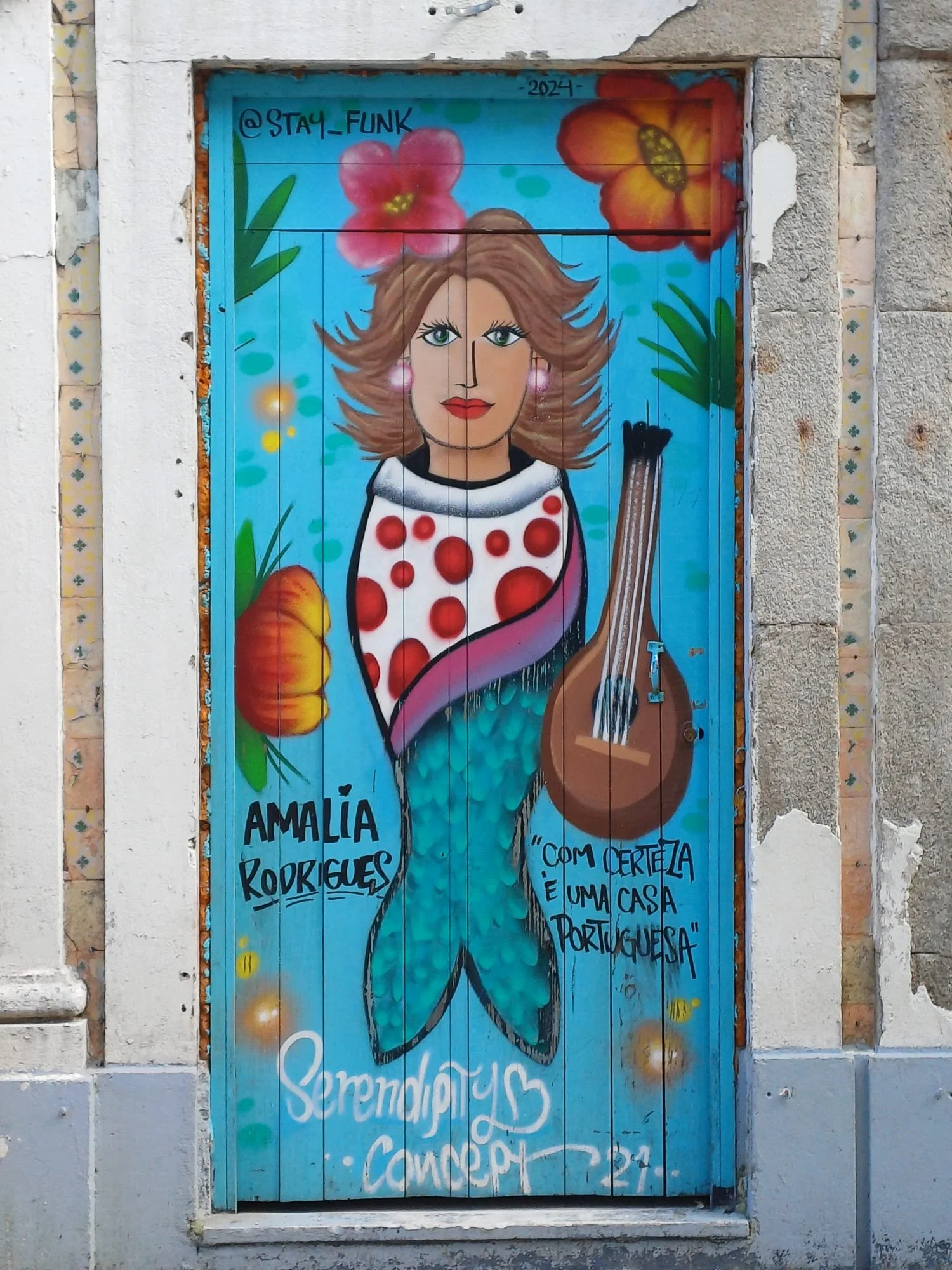
In Portuguese there is a beautiful word for this feeling: Saudade — the sensation of missing something or someone without fully knowing what exactly it is.
This feeling also appears in my professional life: When I worked as a researcher, my intellectual side was stimulated, but my emotional and social side often felt undernourished. When I work as a teacher, I enjoy spending time with children and feel emotionally fulfilled, but after a while I begin to miss intellectual exchange again.
Another in-between.
In-between two places
After one week in Portugal, I realized that my next in-between had already begun. I was still thinking about Istanbul, while at the same time trying to integrate into my new place, Aveiro. A small university town close to Porto, full of students, internationals, and locals of all ages.
Even though everything went smoothly, I could not stop overthinking. Because I realized how much I had enjoyed Istanbul — the relational culture, the big smiles, the warmth, the closeness.
Something shifted there. I was no longer in work mode, but in emotional mode.
During the day, I find myself reflecting on relationships, becoming aware of how much I actually feel. Sometimes, a wave of emotions moves through my body — memories of conversations with my German-speaking friends. On other days, a quiet sadness lingers because I had to say goodbye to someone important. And then again, moments of lightness return — thinking of dancing with my Salsa group, laughter, or the small everyday connections in the Coworking spaces.
Another in-between: Mentally in Istanbul, physically in Portugal.
Even though I enjoy Aveiro, the European lifestyle, and my studies (more on that soon), a part of me has not fully arrived yet. My heart — and parts of my mind — are still elsewhere. So I find myself navigating another transition: reconnecting with my analytical, structured side during the day, and returning to my emotional ground in the evenings.
Maybe this is what integration feels like. Not a clean break, but an overlap. Not a clear arrival, but a gradual becoming.
How long will it take? I don’t know yet. For now, I am learning to stay in the in-between, Inshallah.
In-between control and trusting the process
Lately, I’ve been reflecting a lot on control — and what happens when it slowly slips out of your hands. Coming from Austria, I’m used to structure, planning, things moving in a quite predictable way. You make a plan, you follow it. If it works, you repeat it. You create daily routines: work during the day, free time in the late afternoon. At work, you have colleagues; outside of work, you have family and friends. Saturdays and Sundays are the weekend — no talk about work — and at the same time, during work, you keep your private life private. Everything in order.
Then I moved abroad,
I moved to Mediterranean countries, and eventually to Turkey. And I realized that different cultures structure life very differently. Some people live more day by day, without long-term planning. They form friendships at work and talk about their personal lives over lunch. They might finish earlier during the week, but continue working on a Saturday. It seems like they are less focused on controlling their lives — and more on trusting the process, or each other. In Turkey especially, I experienced how strongly people relate to each other, creating a more fluid social environment. And maybe that’s exactly why it works: because the boundaries are softer, and connection replaces control.
And I noticed how uncomfortable that made me at first.
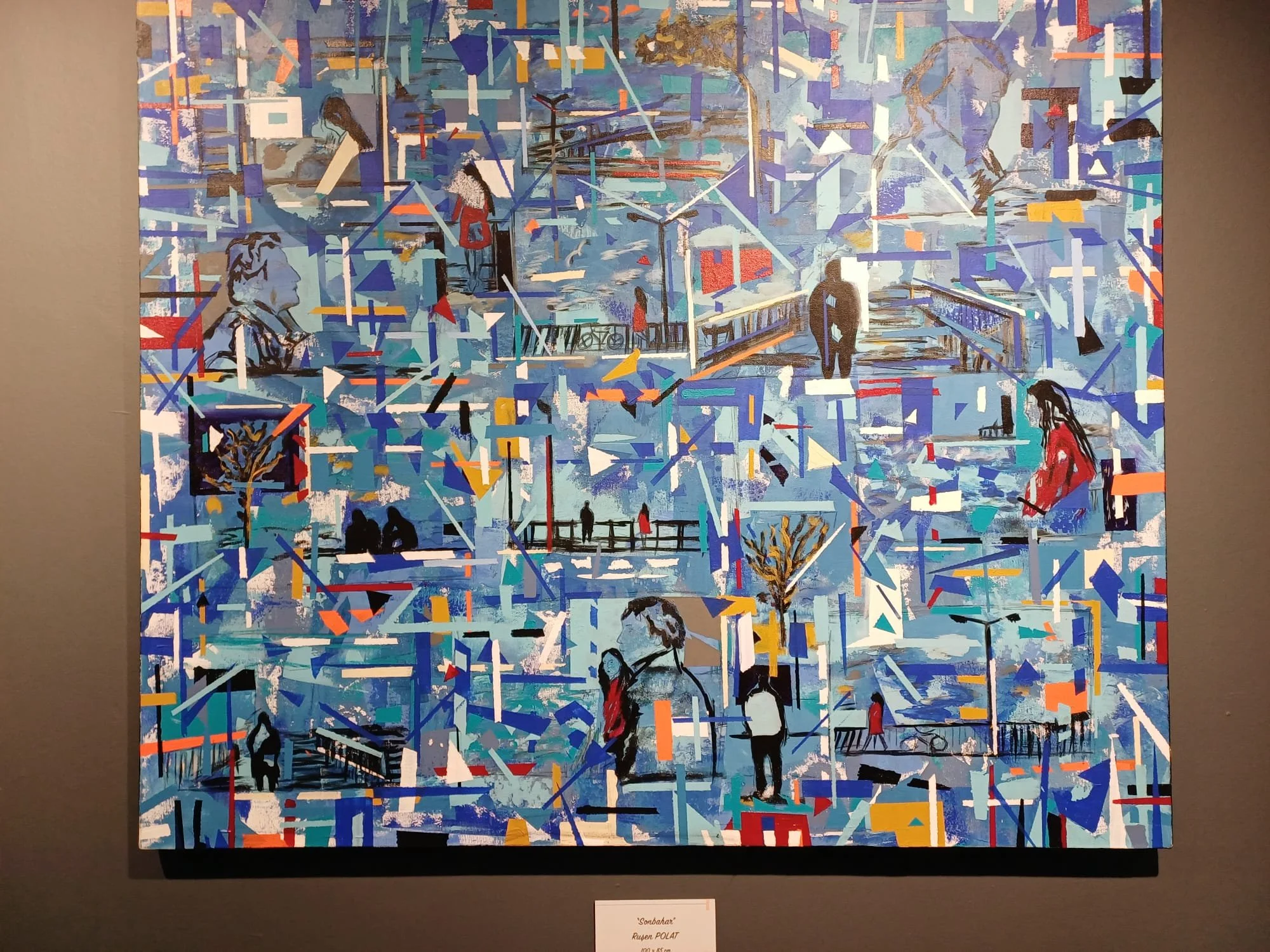
Control, in many ways, creates safety — something also reflected in psychological research, where structure and autonomy are both seen as essential for well-being (Deci & Ryan, 2000). It gives clarity, direction, structure — a sense that you know what’s going on. But the more I tried to hold onto it, the more rigid everything felt. At the same time, “letting go” is not as simple as it sounds, because uncertainty itself is experienced as stressful by the human mind (Carleton, 2016); it creates space for uncertainty and unclear outcomes.
So I started experimenting with something in between.
I made weekly plans of what I wanted to achieve, but without fixed timetables. I took lunch when I actually felt hungry, not when it was “time” to eat. Depending on my evening plans, I either stopped working earlier or continued later. On days when I felt more emotional, I allowed that space. On days when I felt focused, I followed that energy instead. And in coworking spaces, I let conversations happen — small, spontaneous connections that I wouldn’t have planned.
Somewhere between these two extremes, I began to notice a different space.
Not control in the sense of forcing outcomes, but something more responsive. Adjusting instead of fixing. Moving with what is there, instead of constantly trying to shape it — but also stepping in when nothing moves at all. And maybe that’s the uncomfortable part: trusting the process doesn’t come from feeling safe, but from realizing that control is no longer working the way it used to.
What confused me most, though, was that this dynamic didn’t only show up in work or daily structure — it appeared even more strongly in the way I relate to people. Because when it comes to connection, the line between allowing and losing yourself becomes much thinner. And it made me wonder:
When is something meant to be defined — and when are you simply inside something undefined?
Interestingly, in marine ecosystems the most productive environments often exist in transition zones: They exist between ecosystems, known as ecotones, often host increased biodiversity and dynamic interactions due to overlapping environmental conditions. In marine systems, life rarely belongs to just one place. Many species move between ecosystems — from mangroves to seagrass beds to coral reefs — relying on different environments at different stages of their lives (Nagelkerken et al., 2000). These connections are not just optional; they are essential. For example, mangroves can significantly enhance fish populations on nearby coral reefs, showing how deeply linked these systems are (Mumby et al., 2004).
Coral reefs, estuaries, and tidal flats are places where different worlds meet — land and sea, fresh water and salt water, stability and constant change. These ecosystems are dynamic, sometimes unstable, but incredibly rich in life. Perhaps living in-between is something similar. Not a lack of belonging, but a different type of ecosystem. A space where different identities, cultures, emotions, and ways of thinking meet.
Anthropologists call such phases liminal spaces — periods in which someone stands between identities, between stages of life, between worlds.
Maybe that is exactly where I am. Not completely rooted in one place, but learning how to build bridges between many. Connecting with people, places, and Myself - a connection that has flourished recently.
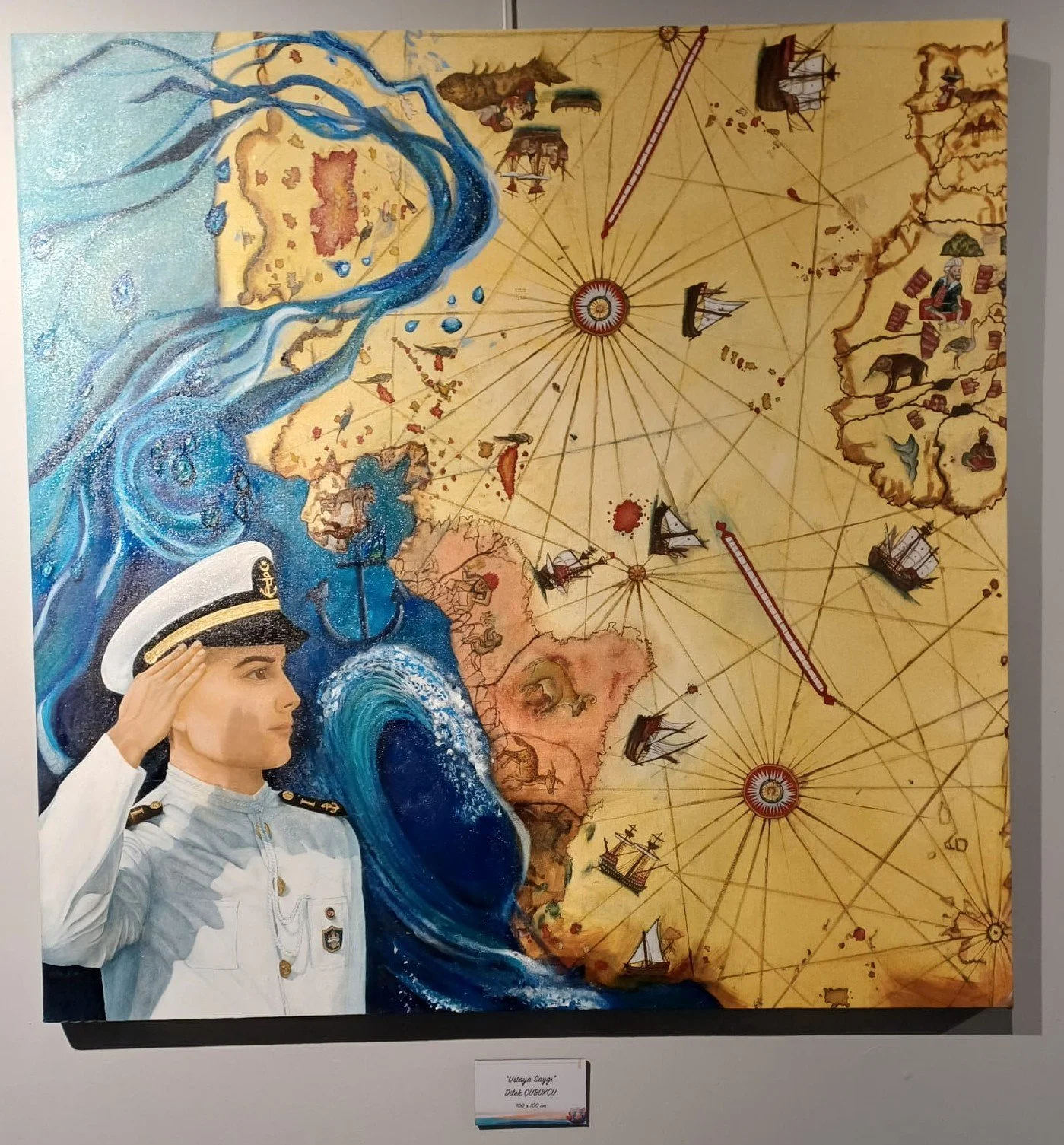
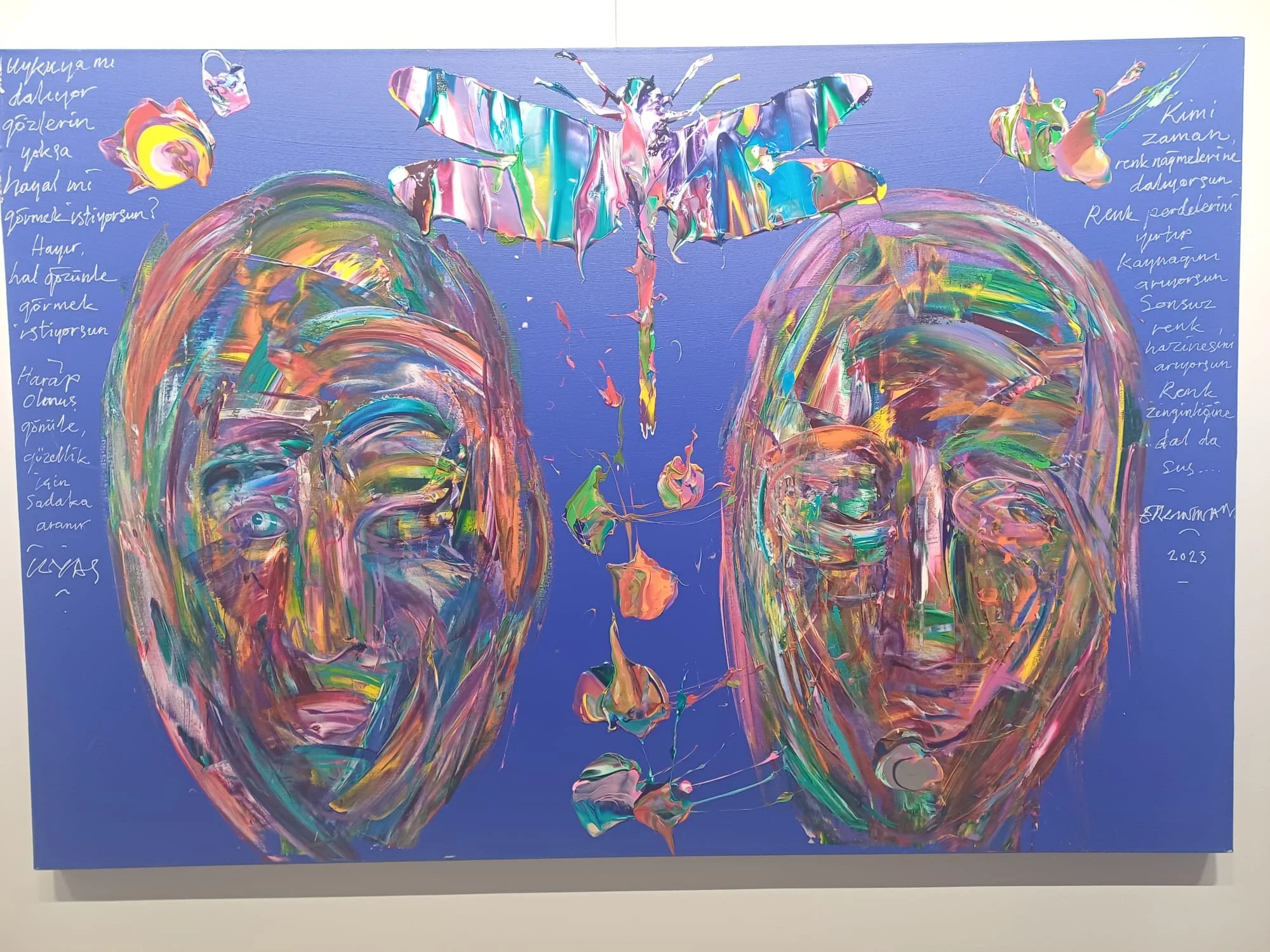
Pictures taken in Istanbul Deniz Müzesi, Kassanat Artgallery, and in Aveiro (PT).
References:
