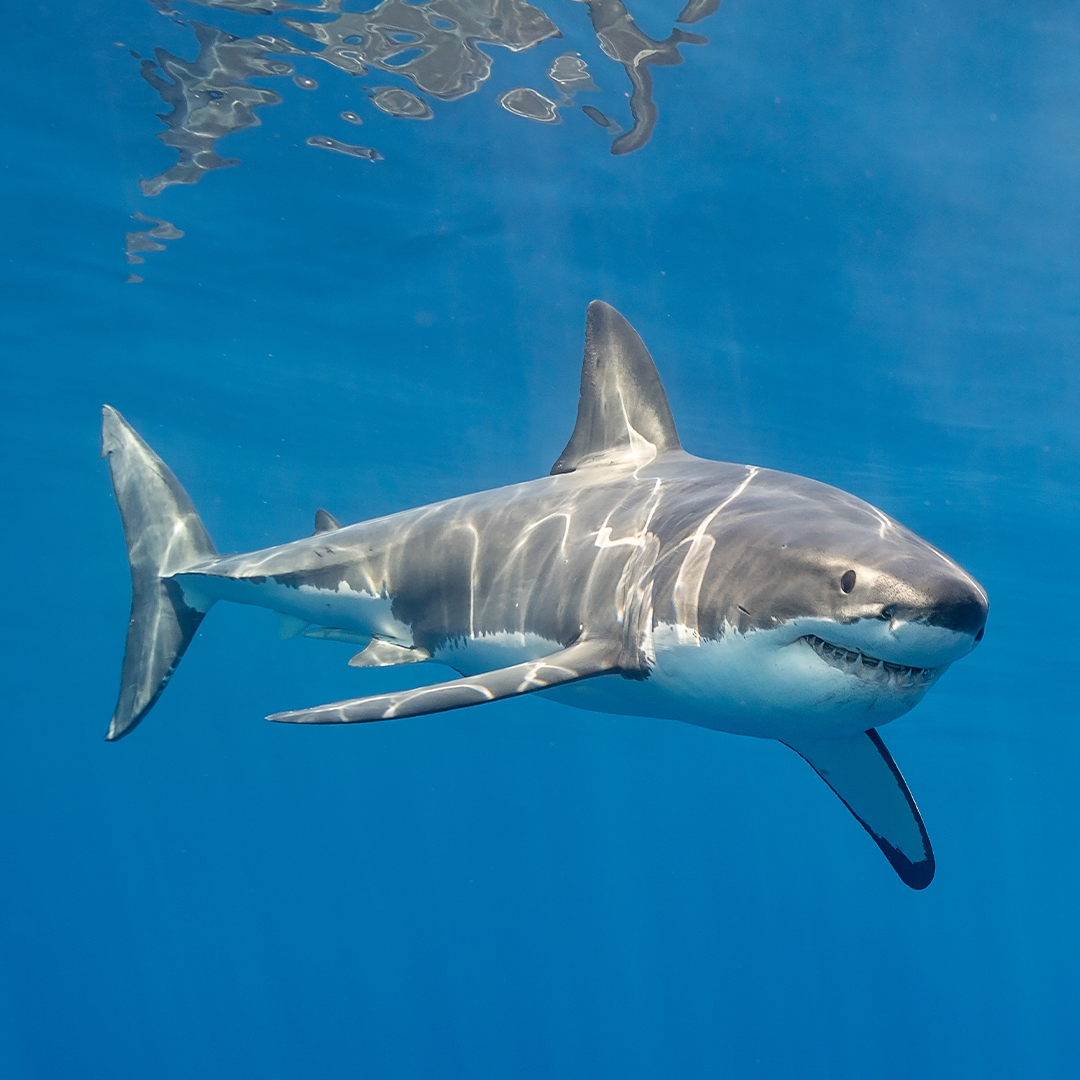

Why sharks matter – and why their survival is about more than science
Sharks have a reputation problem: For many people, the word shark still triggers fear: sharp teeth, danger, attack headlines. What often gets lost in that image is a simple fact:
Sharks are essential for healthy oceans — and they are disappearing fast.
Today, more than one third of all shark and ray species are threatened with extinction. Some populations have declined by over 70% in just a few decades. This is not a distant future scenario. It is happening now. They are often described as apex predators; they help regulate life in the ocean. By preying on weaker, sick, or overabundant animals, sharks:
• stabilise food webs
• prevent single species from taking over
• support coral reefs, seagrass meadows, and fisheries, and therefore
• keep the marine ecosystem intact.
When sharks disappear, ecosystems don’t simply “adjust.” They unravel. Some species multiply unchecked, habitats degrade, and biodiversity declines.
Protecting sharks is not about saving one species - It is about protecting the balance of entire marine systems.
Sharks are not monsters – they are sentient beings
For a long time, sharks were treated as instinct-driven killing machines. Science tells a very different story: They can learn and remember, have their unique characters, and respond emotionally to stress, pain, and environmental change.
So are sharks protected?
The current status quo: protection on paper, pressure in reality
Some sharks are legally protected, others are still fished. Many are caught accidentally, others are traded legally. The result is a system where sharks are constantly under pressure — often invisibly, far from public view.
Sharks are our friends was created to look beyond the stereotypes. It is about understanding the systems that shape their survival — and our relationship with the ocean.
In the upcoming articles, we’ll explore:
• Why shark protection often fails despite laws and agreements
• How the Blue Economy frames sharks as “sustainable resources” — and where this becomes risky
• How fear and media narratives influence shark policy more than science
• Why shark sanctuaries can work — and where their limits are
• What toxic substances like mercury and microplastics tell us about shark meat and human health
• Why shark finning still exists, and how trade keeps it alive
Why this matters to all of us
You don’t need to dive with sharks. You don’t need to live near the ocean.
Sharks are part of a shared global system that regulates climate, food security, and biodiversity. Their decline is a warning sign — not just for the ocean, but for how we manage shared resources on this planet.
Shark conservation does not depend on scientists alone. It depends on informed citizens, transparent policies, and organisations (e.g. Sharkproject) willing to challenge powerful interests.
If sharks are to survive, understanding must come before protection. This is where the journey starts.